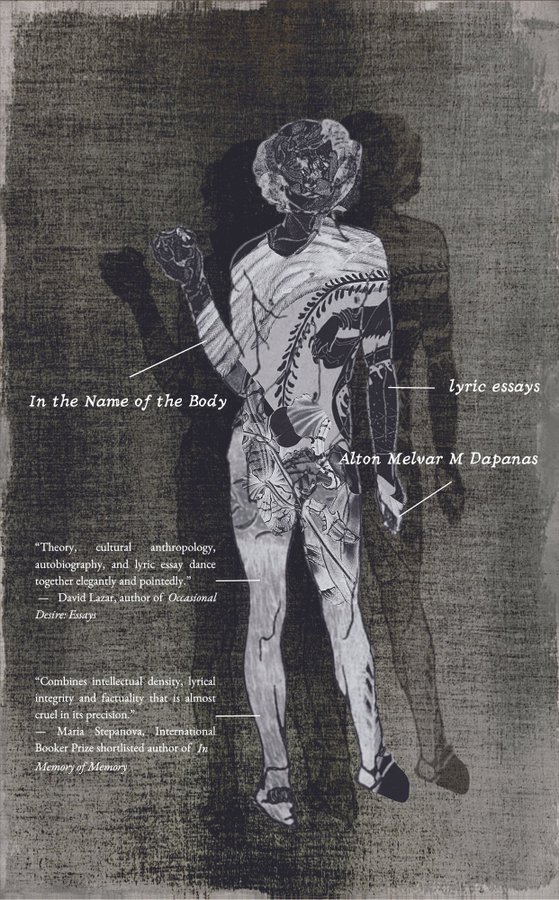
Photo: Alton Melvar M Dapanas, Wrong Publishing
There is no question that every human being needs a place to belong, somewhere that provides the safety and space to flourish, yet belonging is not offered to all. Every society across the globe dictates who fits the standardized norm due predetermined measures, leaving many ostracized from the majority group. Such othering is sadly common to the human experience, which some individuals accept; however, Alton Melvar M Dapanas differs from the norm in that regard. In their lyric collection, In the Name of the Body, Dapanas provides readers a memorable, gut-punching piece of nonfiction.
In the Name of the Body centers on community and the aspects of how our identity exclude us from said community, and this concept is presented in varying ways throughout the collection. The first essay, “The Body as Báyot” examines gender norms, specifically gender expectations within Filipino communities. Dapanas is a non-binary writer from the southern Philippines; therefore, the opening essay clearly examines difficulties Dapanas frequently encountered throughout their life, including constant family scrutiny and judgement. However, what makes this opening essay so captivating are the many experiences present throughout the narrative, for Dapanas illustrates the experiences that many members of the LGBTQIA2S+ community face within the Philippines, which are echoed across the globe. We witness the loss of safety and even death, demonstrating the substantial weight of the book.
After the first essay, the collection continues to focus on Dapanas’ experiences, specifically what it means to be an outsider. We see an examination of the introvert lifestyle within an extroverted society. We even encounter a deep exploration of what it means to acknowledge one’s sexual urges and the stigma of porn addictions, which is highly scrutinized by societies that view sex through a puritanical lens. Time and time again, the collection highlights identities that are looked down on by majority cultures; however, the book reminds us that while we may differ from our community, there are others out there who will both understand us and support us, others who know exactly what you are going through.
In the end, it’s clear that In the Name of the Body is a heavy read. The text is dense with both its factual information and subject matter. These pages are filled with grief and tragedy, and as you read through the book, you’ll grow heavier as you take in the experiences Dapanas shares. This is exactly why you need to read In the Name of the Body today. The collection reminds us of the gentleness and compassion humanity needs to thrive, and if some of are not thriving then none of us are.

 Dominique Weldon
Leave a comment